Theodore Roosevelt National Park
There are 63 National Parks in the US system. I am not an expert on the National Parks by any means, but I have visited 12 to date with the hope of visiting all 63. Some I have spent several days; some I have spent mere hours. I am a wildlife photographer. I will not be telling you the best hikes to take. I only hike when I need to and as short a distance as possible. I will be discussing the history of the parks, wildlife present and general vibe when visiting. There are hundreds if not thousands of people online that can tell you more about hiking in National Parks. I am not the person for this, but I hope you stick around for my unique, nerdy review of the parks.
Theodore Roosevelt was one of the most influential conservation leaders in US history. Named in honor of the 26th president, Roosevelt credits his time in North Dakota after the death of his wife and mother on the same day (1884) with preparing him for his presidency. He later said that he “would not have been President” without his time in the North Dakota badlands.
In 1947, President Truman signed legislation creating the Theodore Roosevelt National Memorial Park. It was the only “National Memorial Park” ever in the US system. It was redesignated to a National Park in 1978.
The park consists of three separate “units”
1. The South Unit (Medora)
2. The North Unit (Watford City)
3. The Elkhorn Ranch Unit (heart of Roosevelt’s ranching years)
The entire park totals about 70,450 acres, with the Sout Unit being larger and more developed. I have visited this park twice. In August of 2024, I visited the North and South Units on separate days as they are approximately 70 miles apart. In May 2026, I visited the South Unit only. I have not visited the Elkhorn Ranch Unit.
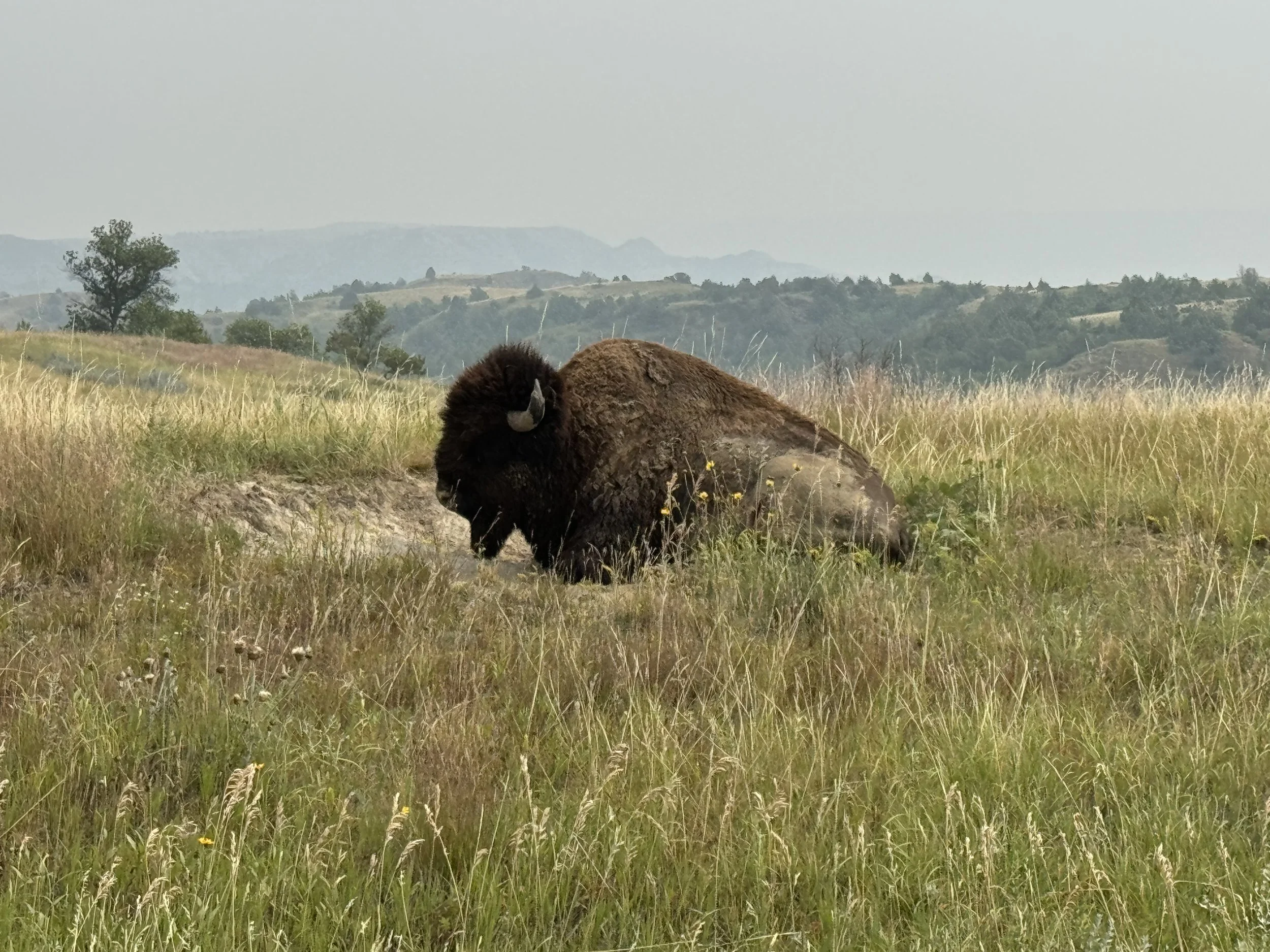
Bison chilling along the roadside in the North Unit
Let’s discuss the North Unit first. It is smaller, more rugged and receives fewer visitors. It has a 28 mile out and back scenic drive. Some things to explore are Cannonball Concretions, River Bend Overlook, Oxbow Overlook, Sperati Point and Caprock Coulee Loop. Of the five hiking trails, Little Mo Trail (easy) and Caprock Coulee Nature Trail (easy to moderate) are the two with the least elevation gain. I recommend checking out the cannonballs which are a geological phenomenon of large, round sediment deposits.
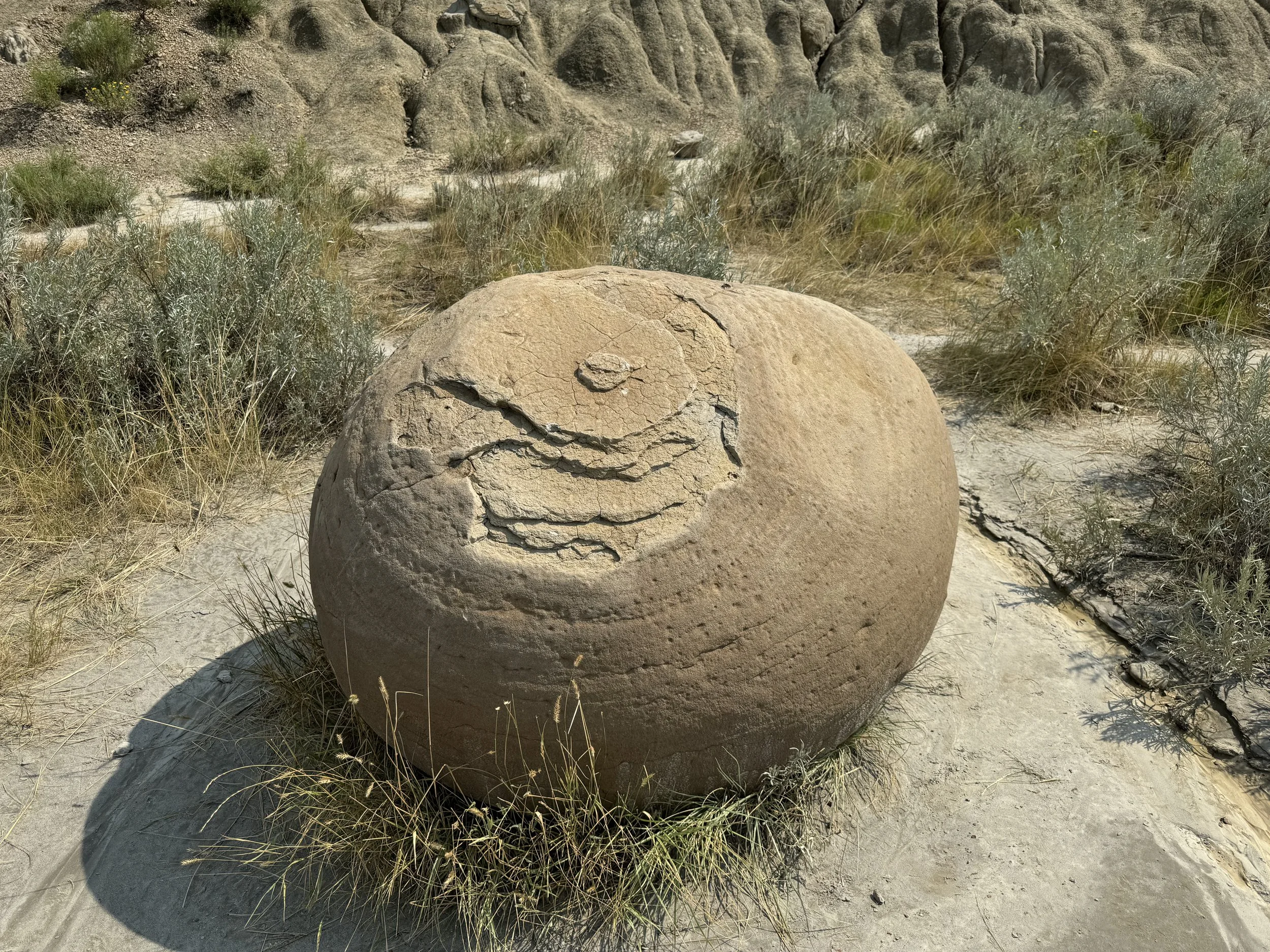
Cannonball
I only spent a short afternoon here in 2024. I did drive the out and back scenic drive. One unique feature is the longhorn cattle. According to the brochure, they were introduced to the North Unit in 1967 as a demonstration of the historical cattle drives conducted in the area during the 1880’s. They are all steers (nonreproductive males) and can often be found near Longhorn Pullout. You will likely see bison somewhere along the drive. They say that there are Bighorn Sheep in the North Unit, but I didn’t see any during my short visit.
I have spent considerably more time in the South Unit. First, I would like to talk about the town of Medora. I was just camping there for five days. Most town activities seem to take place June thru September including several shows that take place daily. To learn more about Medora, check out their website at medora.com. On July 4, 2026, the Theodore Roosevelt Presidential Library will be opening in Medora.
The entrance to the park is in “downtown” Medora. There is a 36-mile scenic drive loop and depending on how many stops you make, will take you about two hours to complete. Every time I have driven the loop, I have seen bison and prairie dogs. There are several prairie dog towns with pull-outs for you to stop and watch these little creatures play. Bison can be seen anywhere along the loop. The unique feature of the South Unit and the reason I have visited on two occasions is the presence of wild horses. In 2024, I didn’t see any wild horses along the loop but this year I had several encounters with the horses. The best place to see the horses is to take Exit 36 off Interstate 94 and follow the dirt road along the boundary fence. I have seen as many as 100 horses at a time in this area. You can also access the Upper Talkington Trail in this area. I have “hiked” two trail in this unit. The Coal Vein Trail is an area that was once burned by an underground coal vein fire. I also “hiked part of the Wind Canyon Trail. It is an area that was “sculpted” by wind instead of water and is incredibly beautiful at sunset. Both trails are easy but do contain stairs.
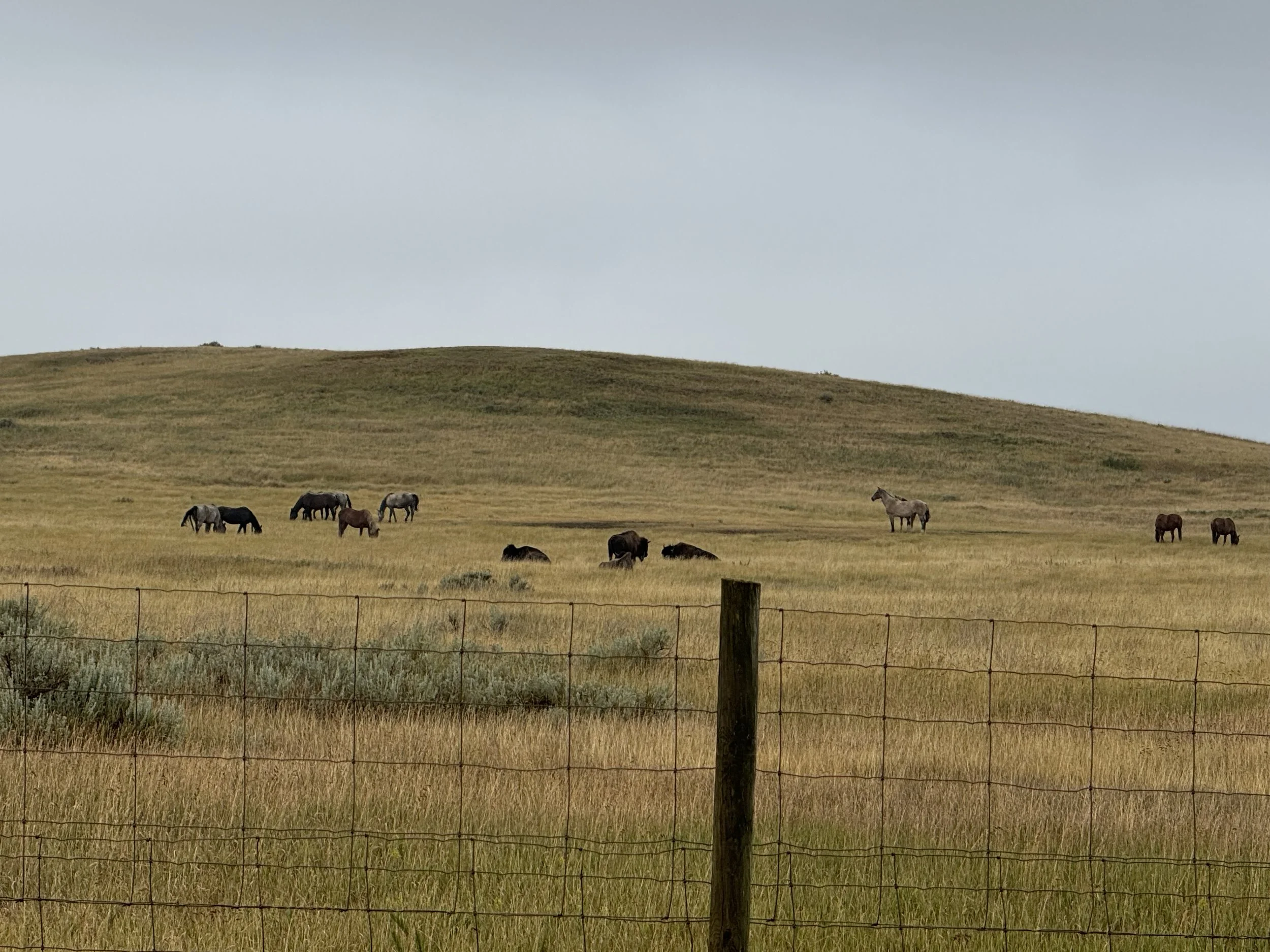
Wild horses as seen from the dirt road at Exit 36
The park averages between 700,000 and 800,000 visitors each year putting it in the middle of the pack in attendance. The busiest months are June, July, and August. Should you visit this park? I would say yes, at least the South Unit. It is worth a day or two stop. You could easily spend a day in the park and a day with activities in town. It provides beautiful Badlands landscape photography opportunities. As far as wildlife photography, the horses are the draw for me. You have bison and prairie dog opportunities but there are better locations like Badlands National Park, Wind Cave National Park and Custer State Park for these species in my opinion. Overall, if you are not a wild horse enthusiast like me, I would have this on my list of parks to visit but probably not at the top.
As always, I welcome any feedback and questions. I plan to discuss a different National Park each month. Let me know your favorite.
If you are interested in more content from me, you can check out my Substack, Facebook and Instagram at the links below.