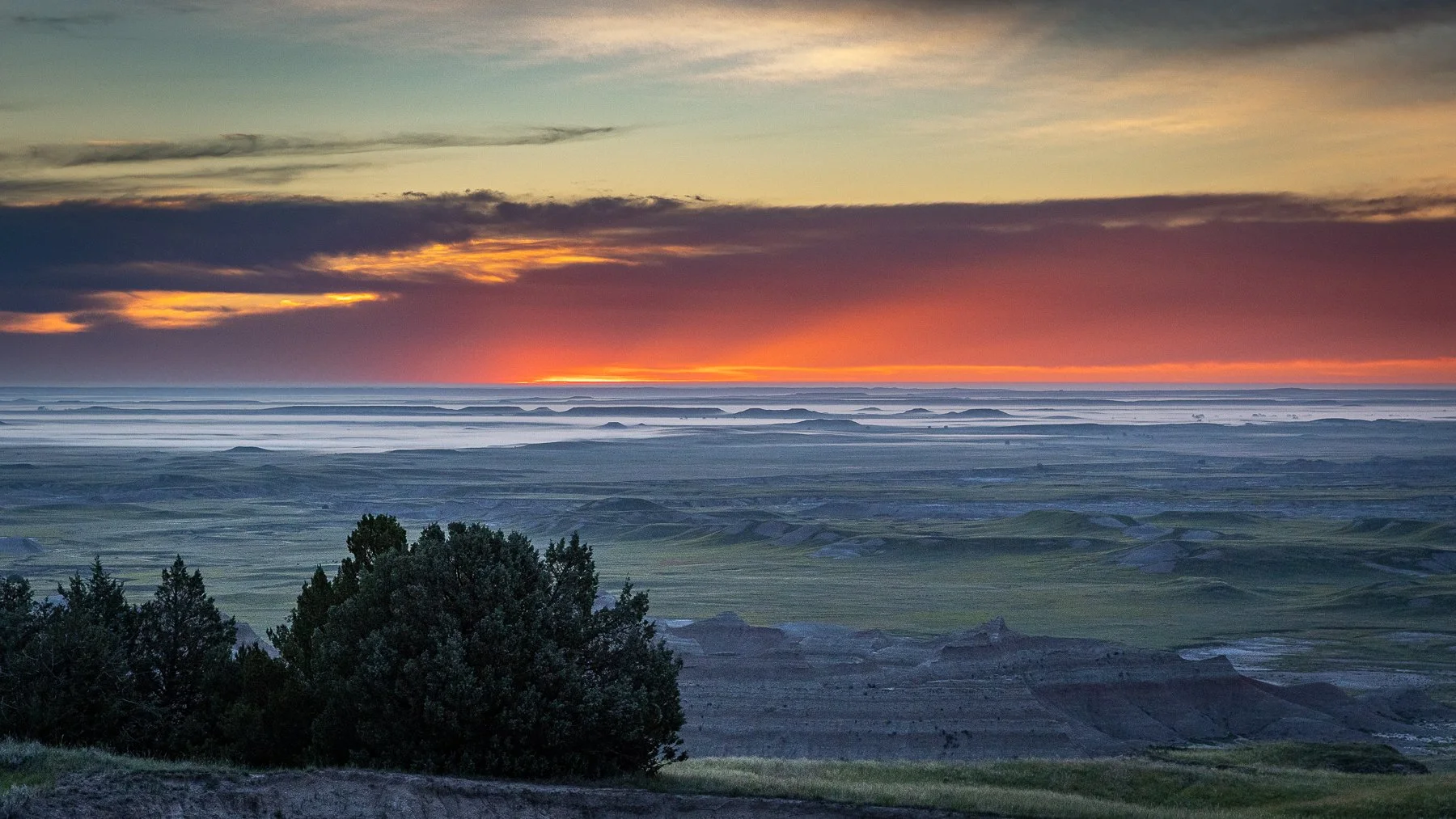
Badlands National Park
Happy Monday! I hope everyone had an enjoyable weekend. I spent the month of June near Badlands National Park. It was the second National Park I ever visited and I was completely mesmerized from the first moment I set foot in the park. Here are some of the history and my thoughts on the park.
The park encompasses 244,000 acres in southwestern South Dakota. This amazing scenery is the result of tens of millions of years of geologic forces of deposition and erosion. The erosion continues to this day and will only stop when the buttes have worn away. The Oglala Lakota called these lands mako sica meaning “land bad” giving to its current name. The park consists of a north and south unit. The north unit is easily accessible from Interstate 90, there is a fee to enter this park. There is a paved road that leads from the eastern entrance to the western entrance that provide some of the most beautiful views I have ever seen. From eroded buttes and pinnacles to the mixed grass prairies it is a sight to behold. The park was originally a reservation of the Oglala Sioux and the south unit is still co-managed with the tribes.
The Badlands was first established as a national monument in order to protect the abundance of fossils found in the area’s natural stone structures. Today, visitors and scientists continue to find fossils in the park. If you stop at the park, be sure to stop by the visitor center and go into the fossil lab where you can watch paleontologists work on fossils that have been found in the park. I was allowed to hold an Oreodont skull that had been found in the park (one of the scientists allowed me to hold it, I don’t think that is normal practice). It is so surreal to be holding the skull of an animal that lived here millions of years ago. Approximately four finds are made by visitors each day. Never touch or remove a fossil found in the park, you should take a picture and note the location and report it to the rangers as soon as possible. They will then determine if it will be excavated.
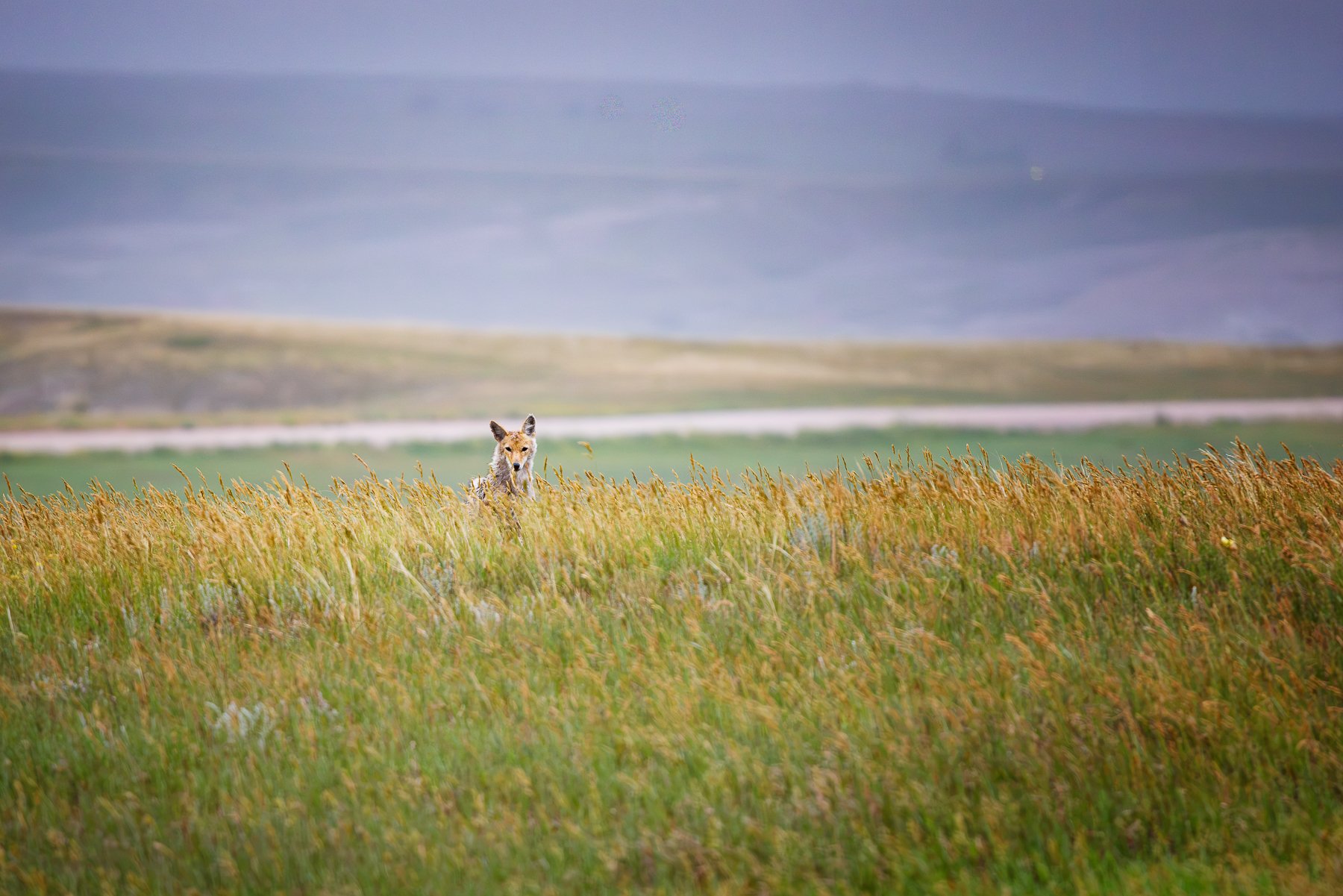
On the photography front, I have seen bison, prairie dogs, pronghorn, coyotes, burrowing owls and bighorn sheep. I want to note here, that many of the bighorn sheep have collars. They have also lost most of their bighorn sheep to a pneumonia type disease and they are not as prevalent in the park at this time. I rarely photograph the bighorns when I’m at the park because of the collars. This year, I had the pleasure of seeing and photographing burrowing owls. They are generally found in the prairie dog towns. I saw several coyotes this year and in the past but never really had a good chance to photograph them until this year on an overcast, rainy day.
I didn’t see many pronghorns this year but have seen them more frequently in the past. The prairie dogs are plentiful and can be photographed in several locations. The big draw is the bison. You can see them anywhere in the park but you will find most of them along Sage Creek Rim Road. You will have the opportunity to photograph them in both prairie and badlands landscapes. This was the place I went to in search of the perfect bison photo.
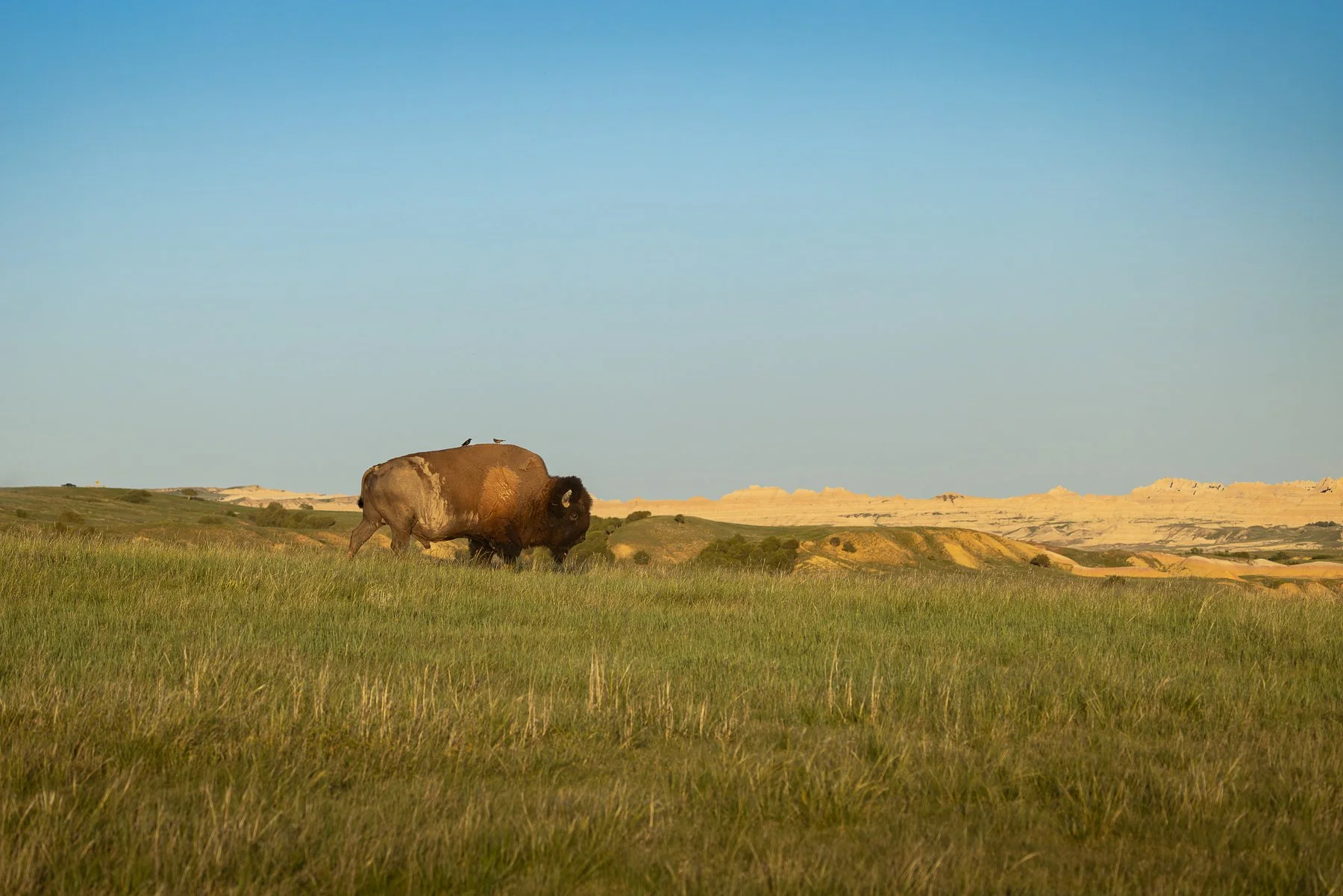
Overall, I love this park as a place to visit as a tourist. It is a unique landscape that I haven’t witnessed at other parks. I always encourage people to take the time to drive through the park. In a photography sense, it depends on a few factors. If you are looking for the badlands backgrounds like I was, then it provides several opportunities to photograph bison and other animals in this landscape. It also has prairie landscape in which you can photograph multiple animals. If you want to photograph bison in large herds, I would probably steer you to Custer State Park. One of the cool parts of Badlands National Park is that it is a site for the conservation of the black-footed ferret. It is my mission to see one in my lifetime.
This is a place I will return to each year for a few weeks to photograph the wildlife and I recommend you visit also.
For more content from me check out my Substack at macturkphotos.substack.com, Instagram at instagram.com/macturkphotos or Facebook at facebook.com/wendy.macturk
Keep exploring,
Wendy