American Beaver (Castor canadensis)
I posted this phone picture of a beaver on my Substack a few days ago.
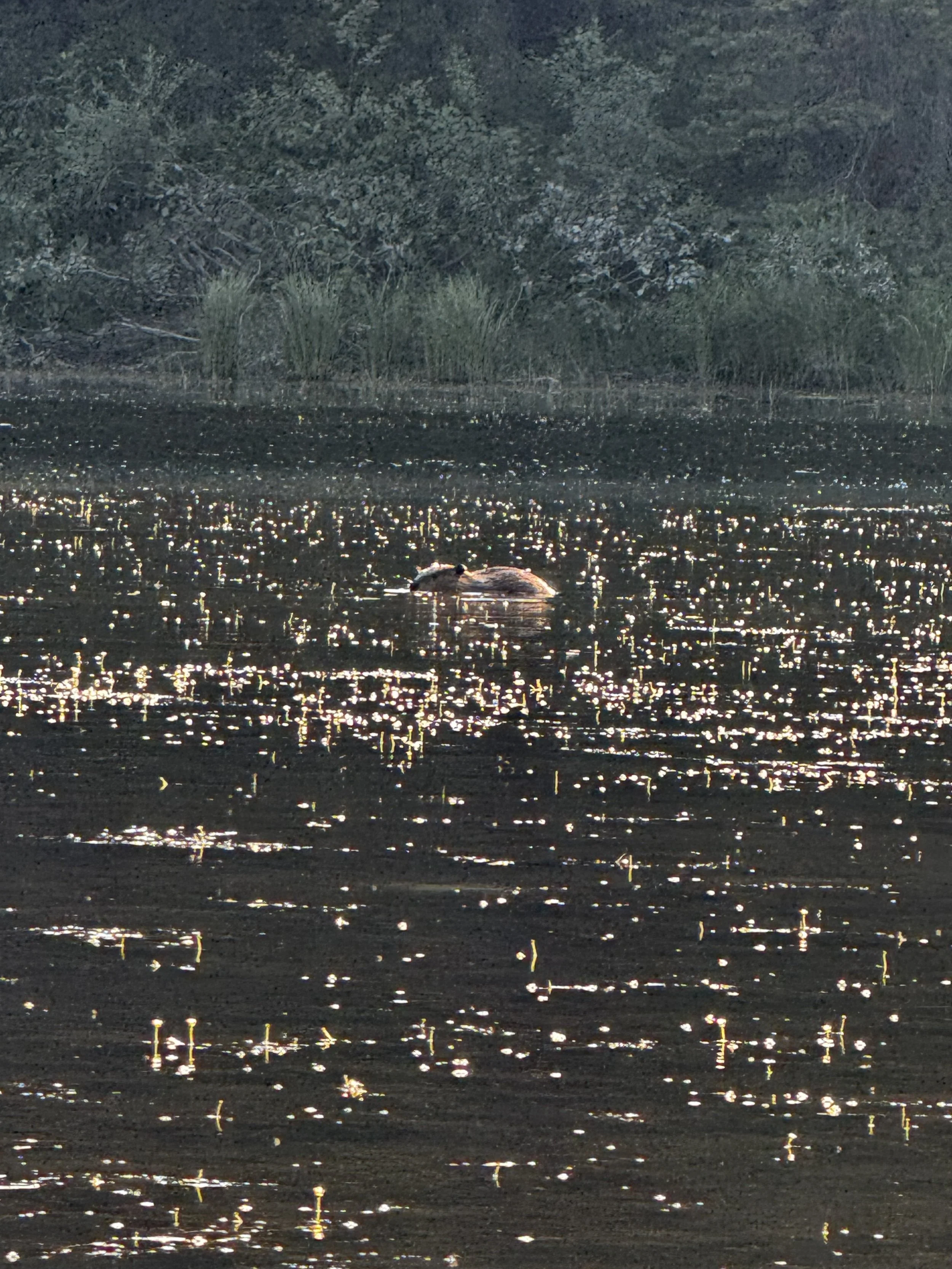
A man Jeff posted a comment, “The story of the American Beaver over the last 400 years is truly fascinating.” I know the basics about the history of beavers, trapped almost to extinction but eventually they recovered. I know they are an important part of their ecosystem and for the environment. His comment got me thinking so to google I went.
Before Europeans arrive, there were 60 - 400 million of beaver occupying North America. Many Indigenous nations regarded the beaver as both an important food source and a symbol of industriousness and cooperation.
Europeans loved beaver pelts and this drove extensive fur trading in 1600s - 1700s. Vast trading networks were established starting with the French then expanding to include the English and Dutch.
In 1700 - 1800, the demand exploded and this led to exploration west across America and Canada. By 1850, it was near collapse of the beaver population. Some areas lost almost 95% of their beaver populations. Wetlands were lost due to the abandonment of active beaver dams and colonies. These changes to the ecosystem went unnoticed and/or misunderstood.
By 1900, fashion trends had started to change from the demand for beaver pelts to a demand for silk. This reprieve allowed beaver populations to recover in the most remote areas of North America. By 1950, early conservationists realized many species were disappearing and stepped in with regulation of trapping, protecting habitat and reintroducing beaver to their original ranges. One of the most unique reintroductions occurred in Idaho between 1940 - 1950. Called “Operation Beaver Drop” they parachuted beavers in specially designed boxes into some of the most remote areas. Upon landing, the box would open and the beaver would move on to repopulate the area. Of the 76 beavers airdropped only one died. I mean how cool is that.
As science developed in the last half of the 1900s, scientists determined that the beaver was an “ecosystem engineer.” Their dams create wetlands, slow floodwaters, recharge groundwater, improve water quality, reduce erosion, and create habitat for hundreds of species. Today, the beaver is considered one of the best recovery stories. With approximately 10-15 million beavers over North America, they have recovered to safe level. As I end my time here at Glacier National Park, I thank the beaver for one of their most important jobs, reduce wildfire impacts by keeping riparian areas moist. There has been a wildfire smoke haze for my entire visit. It could be worse, than you Mr. Beaver.
I hope you have enjoyed my TED talk on beavers.
For more content from me check out my Substack at macturkphotos.substack.com, Instagram at instagram.com/macturkphotos or Facebook at facebook.com/wendy.macturk
Keep exploring,
Wendy